
NDIS Assessment Criteria Changes and What the 1 July 2026 Reforms Mean for Participants and Families
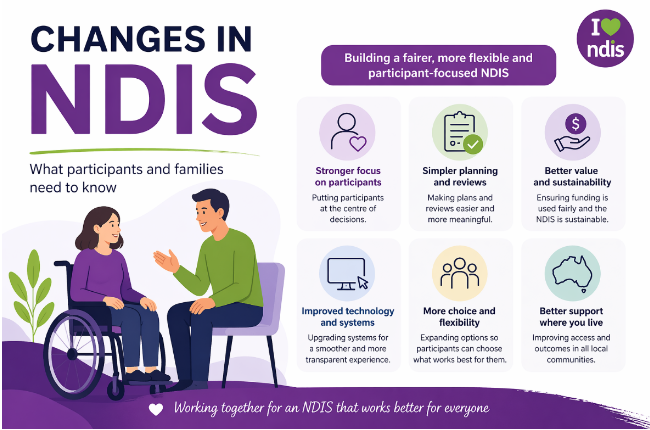
If you or someone you love relies on the National Disability Insurance Scheme, the second half of 2026 is shaping up to be one of the most significant periods in the scheme’s history. From 1 July 2026, the way NDIS plans are assessed, designed, and funded will begin to change in ways that will affect almost every participant eventually — and understanding what is coming is the first step toward making sure your supports remain exactly where they need to be. At Caring Arms Australia, we are a registered NDIS provider committed to keeping the people we support informed, empowered, and well-prepared. Here is everything you need to know about the upcoming changes to NDIS assessment criteria and what the new planning framework means for your day-to-day life. Why Is the NDIS Changing Its Assessment Approach? The existing NDIS planning process has been in place, broadly unchanged, since the scheme launched. Over time, it became clear that outcomes were inconsistent — two participants with almost identical needs could receive very different funding, depending on which planner reviewed their case, which reports they submitted, and how well they navigated the system. The NDIS Review, which consulted thousands of people with disability, families, carers, and providers, confirmed what many already knew: the process needed to be fairer, more transparent, and genuinely person-centred. The new framework is the government’s direct response to that feedback. Rather than relying on functional impairment as the primary lens — essentially, what you cannot do — the new approach shifts focus to what disability-related supports a participant actually needs in their daily life. This is a meaningful philosophical shift, not just an administrative one, and it has the potential to result in plans that better reflect real lived experience. The New Support Needs Assessment: What to Expect The centrepiece of the July 2026 changes is the introduction of a new Support Needs Assessment, which will replace much of the current evidence-gathering process for plan creation. Rather than relying on a collection of reports from treating professionals and lengthy written submissions, participants will instead have a structured conversation with a trained and accredited NDIS assessor. The assessor will meet with participants at a time and place that suits them. Importantly, participants are encouraged to bring family members, carers, or support people to this conversation — this is not a clinical test to pass, but a genuine discussion about daily life and what supports are needed to navigate it. The assessor will use a tool called I-CAN v6 (the Instrument for Classification and Assessment of Support Needs), developed by the University of Melbourne and the Centre for Disability Studies over more than two decades of research in the care sector. This tool is designed to be strengths-based and person-centred, focusing on what kind of support a person needs rather than simply cataloguing their limitations. The assessment report produced from this conversation will directly inform the participant’s NDIS budget. All plans will still be reviewed and approved by trained NDIS staff, and participants will retain their right to request a reassessment or appeal a decision through the Administrative Review Tribunal if they believe the outcome does not reflect their needs. How Plan Budgets Will Change From 1 July 2026 Currently, NDIS plans are organised into three funding categories: Core Supports, Capacity Building, and Capital Supports. Each category has its own rules about what the money can and cannot be spent on, and many participants find the current system rigid and confusing — particularly when their needs don’t fit neatly into one category. From July 2026, new framework plans will move to a simpler two-part structure. The first part is a flexible budget, which participants can use across any approved NDIS supports, giving greater choice and control over how funding is spent. The second part is stated funding, which is designated for specific, higher-intensity supports — such as Supported Independent Living — that require qualified providers and cannot be easily substituted. This restructure is designed to reduce the administrative burden on participants while ensuring the highest-need supports remain properly resourced. Plans will also run for longer periods under the new framework, meaning participants will face fewer routine plan reviews and will have more time and certainty to plan their lives around their supports. Reviews can still be requested at any time if a participant’s circumstances change significantly. Who Will Be Affected First — and When? The rollout will be phased rather than immediate. From 1 July 2026, the NDIS will begin new framework planning with adults aged 18 and over who have less complex support needs. All participants aged 16 and over are expected to be transitioned to new framework plans by October 2029. Participants under 16 will begin transitioning from July 2027, though the Government has acknowledged that no suitable assessment tool for younger children has been finalised yet. Children already enrolled in the NDIS will remain on the scheme during this transition. Changes to access criteria for children under 9 with autism or developmental delay who have lower support needs will not take effect until 1 January 2028 at the earliest, and those changes require separate legislative amendments. If you have a plan review scheduled before 1 July 2026, it will proceed under the current system. Reviews scheduled from July 2026 onward will use the new framework, but only for those in the initial rollout group. Your current plan remains valid until you are personally notified of a transition. There is nothing you need to do right now — the NDIA will contact you directly when your transition is approaching. Mandatory SIL Provider Registration: A Landmark Change for Supported Independent Living Alongside the new planning framework, 1 July 2026 also marks a critical date for Supported Independent Living. From this date, the NDIS Quality and Safeguards Commission is introducing mandatory registration for all SIL providers — including those who have previously operated without registration. This is a significant shift. Until now, the NDIS market has been divided between registered
NDIS 2026 Overhaul: What Mark Butler’s Landmark Announcement Means for Participants — and Why Choosing a Registered Provider Matters More Than Ever
The National Disability Insurance Scheme (NDIS) is undergoing its most significant transformation since its inception — and if you or a loved one rely on NDIS supports, it is vital that you understand what is changing, what it means for your care, and why working with a registered NDIS provider like Caring Arms Australia is more important now than it has ever been. What Did Mark Butler Announce About the NDIS Today? On Wednesday 22 April 2026, NDIS Minister Mark Butler addressed the National Press Club in Canberra and unveiled a sweeping package of reforms aimed at putting the $50 billion-per-year National Disability Insurance Scheme on a sustainable footing. The government’s actuary had already warned that the scheme was on track to blow out by $13 billion over the next four years — and Minister Butler made clear the status quo was no longer tenable. In his own words: “We can’t afford for the NDIS to continue growing at its present rate, but far more importantly, we can’t afford for the NDIS to fail.” Here is a breakdown of the key changes announced: Slower Growth Targets — From 10% Down to 2% Currently, NDIS spending is growing at approximately 10% per year. Minister Butler announced that growth will be wound back to just 2% annually for the next four years, before returning to a target of 5% from 2030. Without this intervention, the scheme was projected to cost taxpayers around $70 billion by 2030. With the new measures in place, that figure is expected to be brought down to approximately $55 billion — a saving of around $15 billion. Around 160,000 Participants May Be Transitioned Off the NDIS One of the most significant — and controversial — elements of today’s announcement is that approximately 160,000 NDIS participants are expected to be moved off the scheme. Minister Butler acknowledged this group is likely to include many people with autism or developmental delays who have “lower support needs.” These individuals will instead be directed towards other government services, such as early intervention programs under the existing Thriving Kids initiative, which runs from October 2026 through to January 2028. This is a significant shift. The NDIS was originally designed to support Australians with significant and permanent disability — and the government says it has expanded well beyond that original scope. Mandatory Provider Registration Expanded to Higher-Risk Supports This is a change that directly affects the quality and safety of care for thousands of Australians. Minister Butler confirmed that mandatory provider registration will be expanded to cover providers delivering higher-risk supports — with personal care explicitly named as one of those categories. This builds on legislation already passed by Parliament. The NDIS Amendment (Integrity and Safeguarding) Bill was passed on 1 April 2026, strengthening the regulatory powers of the NDIS Quality and Safeguards Commission and introducing significantly higher penalties for providers who breach their obligations or supply false information. For participants, this is critically good news. It means that providers delivering personal care and other high-risk supports will now be subject to strict auditing, quality checks, and worker screening requirements — rather than operating outside any formal oversight framework. A New Digital Payment System to Crack Down on Fraud Minister Butler announced the rollout of a new real-time digital payment system designed to prevent fraud across the scheme. Under this model, providers will need to register themselves in the system and provide verified evidence of their work before being paid. This replaces the longstanding “pay now, check later” approach that has allowed fraudulent billing — including invoicing for services never delivered — to cost the scheme hundreds of millions of dollars. The NDIA will also crack down on “ghosting” of invoices, where participants are billed for services they never received. This is a direct consumer protection measure that benefits genuine participants. Spending on Intermediaries Cut by 30% Spending on third-party intermediaries — such as certain plan management and coordination services that add administrative cost without direct participant benefit — will be cut by 30%. The goal is to redirect funding toward direct, high-quality supports for participants rather than administrative overhead. Quality Providers to Be Shortlisted for Participants In a move that directly rewards excellence, Minister Butler confirmed that quality providers will be shortlisted for NDIS participants to choose from. This means registered, compliant providers who consistently deliver high-quality services will gain greater visibility and access within the NDIS marketplace — while those who cannot demonstrate quality service delivery will find it harder to operate. What Does This Mean for NDIS Participants? For many participants, today’s announcement will bring mixed feelings. The prospect of 160,000 people moving off the scheme is genuinely concerning, and advocacy groups have raised important questions about what alternative supports will be available. However, for participants who remain on the NDIS, these reforms are designed to ensure the money in your plan goes further, that the providers you work with are properly vetted, and that fraud — which has drained funds away from people who genuinely need them — is stamped out. The clearest message from today’s announcement is this: the era of unregulated, unaccountable NDIS service delivery is coming to an end. Registered providers who meet strict quality and safety standards will become the gold standard — and for good reason. Why Choosing a Registered NDIS Provider Like Caring Arms Australia Matters More Than Ever At Caring Arms Australia Pty Ltd, we have always believed that genuine, accountable, person-centred care is the foundation of everything we do. We are proud to confirm that Caring Arms Australia is a fully registered NDIS provider, meeting all requirements set by the NDIS Quality and Safeguards Commission. What does that mean for you as a participant or a family member? Peace of mind through accountability. As a registered provider, Caring Arms Australia undergoes rigorous independent audits and is held to the NDIS Practice Standards — the national benchmarks for service quality and participant safety. You can trust that every support we deliver has
Medium Term Accommodation (MTA) Under the NDIS

A Complete Guide for Participants on the Central Coast Finding the right home is one of the most important foundations for independence, dignity, and wellbeing—especially for people living with disability. For many NDIS participants, the journey toward permanent housing such as Supported Independent Living (SIL) or Specialist Disability Accommodation (SDA) can take time. This is where Medium Term Accommodation (MTA) plays a critical and often life-changing role. As one of the leading NDIS Providers on the Central Coast, Caring Arms Australia is proud to offer fully accessible, ready-to-occupy Medium Term Accommodation facilities designed specifically to support participants while they wait for their long-term housing solution of choice. This in-depth guide explains what MTA is, how it works under the NDIS, who it’s for, and how participants on the Central Coast can benefit from high-quality MTA, including homes with ceiling hoists, mobility aids, and clinical-ready environments. Understanding Medium Term Accommodation (MTA) in the NDIS Medium Term Accommodation (MTA) is an NDIS-funded housing support designed to provide safe, suitable, and accessible accommodation for a limited period, generally up to 90 days (and sometimes longer with approval), while a participant is transitioning to a permanent living arrangement. MTA is not intended as long-term housing. Instead, it acts as a bridge—ensuring participants are not left without appropriate accommodation while waiting for: Specialist Disability Accommodation (SDA) Supported Independent Living (SIL) Long-term private rental or home modifications Hospital discharge arrangements SDA construction or vacancy availability For many participants, MTA prevents inappropriate placements such as extended hospital stays, aged care facilities, or unsuitable family homes that cannot meet complex accessibility or clinical needs. Why Medium Term Accommodation Is So Important for NDIS Participants Delays in housing transitions are common across Australia, including on the Central Coast. SDA builds take time, SIL matching can be complex, and participant choice must always be respected. Without MTA, participants can be left in limbo. Medium Term Accommodation offers several critical benefits: Safety and Accessibility First MTA ensures participants live in environments that are fully accessible, explaining why purpose-built MTA is far superior to temporary hotels or short-stay rentals. Continuity of Care Participants can continue receiving supports without disruption while long-term housing decisions are finalised. Reduced Stress for Families and Carers Families gain peace of mind knowing their loved one is in a clinically safe, supported environment. Time to Make the Right Choice Participants are not rushed into unsuitable SIL or SDA placements simply due to urgency. Who Is Eligible for Medium Term Accommodation Under the NDIS? MTA is generally suitable for NDIS participants who: Are approved for or awaiting SDA or SIL Have complex physical or clinical support needs Are exiting hospital and cannot safely return home Are awaiting home modifications to be completed Are transitioning between providers or living arrangements Require fully accessible housing with assistive technology Funding for MTA usually covers the accommodation cost only, while daily supports are funded separately through the participant’s core or capacity-building supports. A strong NDIS Provider will assist with evidence, reporting, and coordination to support MTA approvals and extensions where required. Medium Term Accommodation vs SIL vs SDA – What’s the Difference? Understanding the distinction is important when planning the right pathway. Medium Term Accommodation (MTA) Short-term solution (typically up to 90 days) Used while waiting for permanent housing Focus on safety, accessibility, and stability Does not determine long-term living arrangements Supported Independent Living (SIL) Long-term support model Focused on daily living assistance Can be delivered in SDA or private homes Requires participant matching and ongoing agreements Specialist Disability Accommodation (SDA) Long-term, purpose-built housing Designed for participants with extreme functional impairment or high support needs Includes categories such as High Physical Support Often involves waiting periods due to limited supply MTA plays the crucial transition role between these options. The Growing Need for MTA on the Central Coast The Central Coast of NSW has seen strong growth in NDIS participation, but housing supply—particularly SDA—has not always kept pace. This has increased demand for high-quality Medium Term Accommodation that is: Close to hospitals and allied health services Near families and community supports Designed for high physical support needs Available immediately when required As trusted NDIS Providers on the Central Coast, Caring Arms Australia recognised this gap early and invested in ready-to-occupy MTA facilities that genuinely meet participant needs. Caring Arms Australia – Leading NDIS Provider for MTA on the Central Coast Caring Arms Australia is a locally based NDIS provider with deep roots in the Central Coast community. We specialise in complex care, accommodation, and clinical-ready support environments, making us uniquely positioned to deliver exceptional Medium Term Accommodation. Our MTA Facilities Include: Fully accessible, modern homes Ceiling hoist installed Motorised wheelchair access throughout Spacious, accessible bathrooms Assistive technology-ready infrastructure Safe overnight support provisions Proximity to medical services and transport Calm, residential neighbourhood settings Our MTA homes are not makeshift solutions—they are designed to feel like home while delivering hospital-grade accessibility and safety. Ceiling Hoists and Mobility Aids – Why They Matter in MTA For participants with high physical support needs, ceiling hoists are not a luxury—they are essential. Caring Arms Australia offers MTA with pre-installed ceiling hoists and reinforced structural supports, eliminating delays and risks associated with temporary setups. Benefits of Hoist-Ready MTA: Reduced manual handling injuries Safer transfers for participants Greater dignity and comfort Faster hospital discharges Immediate readiness without modifications This makes our MTA facilities ideal for participants transitioning from hospital or awaiting SDA High Physical Support housing. How MTA Supports Better Long-Term Outcomes Medium Term Accommodation is more than just a stopgap—it can significantly improve long-term outcomes when delivered properly. Improved SDA Matching Participants can take time to choose SDA that truly meets their needs rather than accepting the first available option. Better SIL Compatibility Time in MTA allows providers and participants to assess support needs, routines, and preferences before committing to long-term SIL arrangements. Reduced Risk of Placement Breakdown Rushed placements often fail. MTA reduces this risk by offering breathing space
NDIS Providers Central Coast – Your Guide to SIL and SDA with Caring Arms

Finding the right NDIS Provider Central Coast can make a world of difference in the life of an NDIS participant. Whether you’re looking for Supported Independent Living (SIL) or Specialist Disability Accommodation (SDA), Caring Arms is here to guide you every step of the way. In this article, we’ll explore your NDIS accommodation options, explain the difference between SIL and SDA, and share why the Central Coast is one of the best places for accessible, inclusive living. Why Choose an NDIS Provider on the Central Coast? The Central Coast offers a unique combination of community connection, beautiful surroundings, and access to quality support services. By choosing a local NDIS registered provider, you’re not just getting services — you’re building a support network close to home. At Caring Arms, we understand that NDIS support services Central Coast participants need are more than just accommodation — they’re about independence, dignity, and quality of life. Supported Independent Living (SIL) Central Coast If you’re looking for a living arrangement that provides day-to-day support while helping you build independence, Supported Independent Living Central Coast options may be the right choice. SIL Central Coast homes are designed for people who: Need help with daily activities such as cooking, cleaning, or personal care. Want to live with other NDIS participants or on their own. Have funding in their NDIS plan for Supported Independent Living. Caring Arms offers NDIS SIL homes Central Coast that are welcoming, safe, and tailored to your needs. Specialist Disability Accommodation (SDA) Central Coast For participants with high physical support needs, Specialist Disability Accommodation Central Coast provides purpose-built housing with features that make everyday life easier. Our SDA homes Central Coast include: Step-free access and wide doorways. Accessible bathrooms and kitchens. Assistive technology to support independence. By choosing NDIS SDA homes Central Coast through Caring Arms, you get more than a house — you get a home designed for comfort, safety, and dignity. NDIS Accommodation Central Coast – What’s the Difference Between SDA and SIL? One of the most common questions is: What’s the difference between SDA and SIL? SDA covers the home itself — it’s about the building design and accessibility features. SIL covers the support you receive while living there — things like personal care, cooking, and skill building. Many participants have both SDA and SIL funding, allowing them to live in a suitable home with the right level of daily support. NDIS Housing Central Coast – Your Options There are several NDIS housing Central Coast solutions, depending on your needs: SIL Central Coast homes – Shared living with support. SDA Central Coast properties – Accessible homes for high physical support needs. Short Term Accommodation (STA) & Respite – Temporary stays for rest and recovery. Medium Term Accommodation (MTA) – Transitional housing while waiting for permanent arrangements. Affordable SDA Homes in Central Coast We know affordability matters. That’s why our affordable SDA homes in Central Coast are designed to meet NDIS funding criteria so you can focus on living your best life without financial stress. How to Apply for NDIS SIL in Central Coast Applying for NDIS SIL Central Coast services is easier with the right guidance: Check your NDIS plan for SIL funding. Contact Caring Arms to discuss your needs. We’ll match you with the right home and support team. Best NDIS Provider for SDA in Central Coast Choosing the best NDIS provider for SDA in Central Coast means finding a team that listens, understands, and delivers. Caring Arms combines local expertise, accessible housing design, and personalised support to help participants thrive. Why the Central Coast is Perfect for NDIS Participants The Central Coast isn’t just a location — it’s a lifestyle. With disability-friendly facilities, community activities, and stunning beaches, it’s no wonder so many participants choose to live here. Our Central Coast NDIS housing options are in safe, accessible neighbourhoods close to shops, transport, and healthcare services. SDA Design Features for NDIS Participants At Caring Arms, our SDA design features include: Open-plan layouts for wheelchair access. Smart home technology for convenience. Energy-efficient designs to reduce living costs. NDIS Short Term Accommodation Central Coast Whether you need a break, recovery time after hospital, or temporary housing while your permanent home is ready, our NDIS short term accommodation Central Coast options provide comfort and care. NDIS Respite Accommodation Central Coast NDIS respite accommodation Central Coast services give carers the chance to rest while ensuring participants receive quality support in a safe, welcoming environment. How SIL Supports Independence for NDIS Participants Supported Independent Living isn’t just about having someone there — it’s about building confidence, learning skills, and enjoying life on your terms. At Caring Arms, our SIL services focus on your goals, whether that’s cooking your favourite meal or managing your own schedule. Your Trusted NDIS Registered Provider Central Coast Caring Arms is proud to be a NDIS registered provider Central Coast. Our commitment is to provide high-quality, participant-focused services that empower independence and improve quality of life. Get Started Today If you’re ready to explore NDIS accommodation Central Coast options, contact Caring Arms today. Whether you need SIL Central Coast, SDA Central Coast, or short-term solutions, we’ll help you find the perfect fit. 📞 Call us on 0435353845 | 🌐 Visit www.caringarms.com.au
Navigating the Latest NDIS Changes: What It Means for Participants and Providers on the Central Coast
The National Disability Insurance Scheme (NDIS) continues to evolve, with recent updates affecting pricing, provider responsibilities, and participant support options. These changes are designed to improve the delivery of disability services, ensuring better outcomes and greater transparency. If you’re searching for reliable NDIS providers on the Central Coast, it’s essential to understand how these reforms impact both participants and service providers. At Caring Arms Australia, a trusted NDIS provider on the Central Coast, we’re committed to keeping you informed and supported through every policy shift. In this article, we’ll explore the latest updates in NDIS pricing, Supported Independent Living (SIL), Specialist Disability Accommodation (SDA), and how these changes are shaping the future of disability services in our region. Overview of the NDIS Reform Agenda In 2024 and 2025, the NDIS has undergone substantial reform as part of the federal government’s response to the NDIS Review Final Report released in December 2023. The review identified a need for: Stronger safeguards for participants Improved service quality and consistency More efficient use of NDIS funding Better alignment between the NDIS and mainstream services For participants and families on the Central Coast, these changes are particularly significant. With a growing number of individuals relying on the scheme, understanding how new policies influence local service delivery is critical. NDIS Pricing Updates 2025–26 Key Pricing Adjustments In July 2025, the NDIA released the 2025–26 Pricing Arrangements and Price Limits, which included an average 3.75% price increase across most support categories. This adjustment reflects changes in award wages, inflation, and service delivery costs to ensure providers can continue delivering high-quality care sustainably. For participants engaging with NDIS providers on the Central Coast, this means your plan budgets may need to be reviewed to ensure supports remain aligned with the new pricing. Whether you’re accessing SIL, SDA, therapy, or daily living supports, Caring Arms is here to help you make sense of the changes and maximise the value of your plan. Changes to Supported Independent Living (SIL) SIL Redefined Supported Independent Living (SIL) continues to be a vital service for individuals with higher support needs. However, the NDIA is shifting focus to encourage more person-centred and outcomes-based supports. Recent updates to SIL include: A move toward more tailored, individualised funding instead of block-funded, shared models. Emphasis on functional assessments and evidence-based reports when applying for SIL funding. Tighter scrutiny of SIL claims to ensure funding is used appropriately. If you are seeking SIL in the Central Coast, it’s essential to choose a provider who understands these reforms and can help you navigate the approval process. Our Approach to SIL Caring Arms delivers SIL services across the Central Coast with a focus on independence, safety, and dignity. We work closely with participants, families, and allied health professionals to ensure every SIL arrangement meets NDIA requirements and reflects individual goals and living preferences. We also provide support with Functional Assessments, Behaviour Support Plans, and collaboration with allied health professionals to secure and maintain SIL funding under the updated system. SDA Funding and Compliance Updates New Guidelines for SDA Specialist Disability Accommodation (SDA) remains a key pillar in the NDIS for individuals with extreme functional impairment or very high support needs. The latest updates include: Stronger building compliance enforcement through the SDA Design Standard and NDIS Quality and Safeguards Commission. Greater transparency in SDA vacancy listings and provider registration. Encouragement of mixed-model housing with mainstream tenants and greater community integration. Participants looking for SDA in the Central Coast should be aware of these changes when considering their housing options. Why Choose Caring Arms for SDA? At Caring Arms, we specialise in helping participants find high-quality, compliant SDA properties in the Central Coast that are designed for long-term comfort, accessibility, and inclusion. Whether you are seeking Fully Accessible, High Physical Support, or Improved Liveability dwellings, we offer end-to-end support from application to tenancy. Our experienced team ensures your SDA funding aligns with your support needs, while also providing tenancy support and transition planning. Greater Oversight of NDIS Providers Provider Registration and Audit Requirements One of the major outcomes of the recent NDIS reform is increased regulatory oversight. All registered NDIS providers in the Central Coast and across Australia must: Undergo stricter registration and audit procedures through the NDIS Quality and Safeguards Commission. Demonstrate robust policies in safeguarding, incident reporting, and participant engagement. Provide evidence of continuous improvement, participant feedback systems, and workforce training. At Caring Arms, we embrace these changes. As a fully registered and audited NDIS provider on the Central Coast, we prioritise safety, transparency, and participant rights. We maintain clear documentation and open communication with every participant to build trust and accountability. What Participants Should Do Next Navigating these NDIS changes can feel overwhelming, but you don’t have to do it alone. Here’s what you can do: Review your NDIS plan: Check if your current funding aligns with the new price guide and support definitions. Talk to your support coordinator: A good support coordinator can help reassess your goals and connect you with services that reflect the latest rules. Consider your accommodation needs: If you’re exploring SIL or SDA in the Central Coast, work with experienced providers like Caring Arms who can guide you through the eligibility and application process. Choose registered providers: Make sure your provider meets updated compliance standards and offers transparent pricing. Why Caring Arms is Your Trusted NDIS Provider on the Central Coast Caring Arms is proud to be one of the most trusted and compassionate NDIS providers in the Central Coast region. We offer a range of personalised supports, including: Supported Independent Living (SIL) solutions Specialist Disability Accommodation (SDA) Community Access and Participation Support Coordination Assistance with Daily Living And more Our local knowledge, professional expertise, and values-based approach make us the ideal partner for your NDIS journey. Final Thoughts: Staying Informed, Staying Empowered The NDIS is evolving — and so are the expectations for participants and providers. These latest changes are designed to ensure better outcomes, increased accountability, and more sustainable service delivery
Understanding Disability Services in Australia: A Comprehensive Guide for Participants and Families

Navigating life with a disability or supporting someone with one can be both rewarding and challenging. Whether you’re living with a physical, intellectual, or psychosocial disability, the right support system can empower independence, improve quality of life, and foster a stronger sense of community. In Australia, “Disability Services” encompass a broad range of supports that help individuals with disabilities live safer, more fulfilled lives. At Caring Arms Australia, we are committed to providing tailored, compassionate, and expert care across the Central Coast and beyond. In this blog, we will explore everything you need to know about disability services — from what they are, to who provides them, how to access them through the NDIS (National Disability Insurance Scheme), and why Caring Arms is your trusted local partner in care. What Are Disability Services? Disability services refer to a wide variety of support programs and resources designed to help people with disabilities live independently and participate fully in their communities. These services can include: Personal care and support Access to healthcare Accommodation and housing options Transportation services Community participation programs Therapy and rehabilitation Employment assistance Assistive technology These services are essential in empowering individuals with disabilities to live their best lives, achieve personal goals, and maintain dignity and independence. The Role of the NDIS in Disability Services In Australia, the National Disability Insurance Scheme (NDIS) is the primary government initiative that funds and coordinates disability support. The NDIS provides eligible Australians under the age of 65 who have a permanent and significant disability with funding to purchase supports and services tailored to their individual needs. NDIS participants work with their providers, such as Caring Arms, to develop a person-centred plan that ensures their goals and aspirations are at the forefront of every support provided. To learn more about NDIS eligibility and how to apply, visit the official NDIS website. Why Disability Services Matter Quality disability services are more than just supports — they are life-enhancing tools. Here’s why they matter: Promote Independence From learning life skills to gaining employment, disability services help individuals achieve a greater degree of self-reliance. Enhance Quality of Life Access to proper housing, therapy, healthcare, and social inclusion improves the physical and emotional well-being of people with disabilities. Support Families and Carers By providing reliable and skilled support workers, disability services reduce stress on families and carers, ensuring better outcomes for everyone. Foster Inclusion Community programs and participation services help people with disabilities engage with their local communities and feel a sense of belonging. Types of Disability Services Offered at Caring Arms Australia At Caring Arms, we offer a wide range of NDIS-approved services across the Central Coast, tailored to suit the needs of each individual participant. Here’s a closer look at what we provide: Supported Independent Living (SIL) Our SIL homes are designed to support NDIS participants who need help with daily living while maintaining a level of independence. Our trained support workers provide 24/7 assistance in modern, accessible homes, including wheelchair-friendly options. Learn more about Supported Independent Living (SIL) Specialist Disability Accommodation (SDA) For individuals with extreme functional impairments or very high support needs, we offer SDA housing that meets stringent NDIS design standards. Our homes are safe, functional, and designed to provide comfort and care. Medium Term Accommodation (MTA) Our MTA options provide short-term housing for participants awaiting permanent SDA or SIL placements. These homes are ideal for transitions or emergency situations and come with all the necessary supports. Read about MTA in NDIS Community and Social Participation We encourage our participants to engage with the community through day programs, outings, and group activities. From art classes to beach walks, we make community participation fun and meaningful. Support Coordination Navigating the NDIS can be complex. Support Coordinators work closely with participants to manage their funding, connect with the right providers, and achieve their goals. Plan Management Plan Management services take care of budgeting, paying invoices, and financial reporting, allowing participants to focus on living their best lives. Respite and Short-Term Accommodation We provide short-term stays that offer both participants and their carers a well-deserved break, in a safe and nurturing environment. Who Can Access Disability Services? Disability services are available to: NDIS participants with an approved plan Individuals who have a permanent and significant disability Family members and carers seeking respite or support People with disabilities transitioning from hospitals or care facilities Even if you are not currently approved for NDIS, Caring Arms can guide you through the application process and help connect you with interim supports and support coordinators. How to Choose the Right Disability Services Provider Choosing the right disability service provider is crucial for your well-being and long-term success. Here are some things to consider: Experience and Credentials Look for providers that are registered with the NDIS and have a track record of quality service delivery. Range of Services Ensure the provider offers a wide variety of services so you can receive all supports under one roof. Personalised Support Your disability service provider should offer individualised support plans that align with your goals and lifestyle. Cultural Sensitivity The provider should understand and respect your cultural, religious, or personal preferences. Local Knowledge A provider based in your area, like Caring Arms on the Central Coast, will have better access to community resources and networks. Why Choose Caring Arms Australia? At Caring Arms, we pride ourselves on being a trusted local NDIS provider offering compassionate and customised support. Here’s what sets us apart: ✔️ Central Coast-Based: We’re local and know the community inside out. ✔️ Complex Care Specialists: We specialise in supporting individuals with complex needs and disabilities. ✔️ Wheelchair Accessible Homes: Our accommodation is designed with accessibility at the core. ✔️ 24/7 Support: Round-the-clock assistance in a safe and homely environment. ✔️ Experienced Team: Our trained professionals are passionate about care and inclusion. ✔️ Culturally Inclusive: We work with participants from all walks of life with empathy and respect. We don’t just offer services; we build relationships, empower people, and help
NDIS Providers and Disability Support Services on the Central Coast NSW: Your Complete Guide

Finding reliable, caring, and high-quality NDIS providers and disability support services on the Central Coast NSW can make a life-changing difference for participants and their families. Whether you need supported independent living (SIL), specialist disability accommodation (SDA), day programs, plan management, or support coordination, the Central Coast offers a wide range of trusted providers. One of the standout providers making a real impact in the region is Caring Arms Australia. In this article, we’ll explore how Caring Arms Australia leads the way in providing exceptional disability support services, along with an overview of other reputable organizations like CCLO, JustCos, CCPC, and 24/7 Care Services. Caring Arms Australia: Your Trusted Local NDIS Provider When it comes to finding a compassionate, participant-focused NDIS provider, Caring Arms Australia stands out for its commitment to person-centered support, complex disability care, and accessible housing solutions. Based in the heart of the Central Coast, Caring Arms Australia offers a wide range of services, including: Supported Independent Living (SIL) Specialist Disability Accommodation (SDA) Short Term Accommodation (STA) and Medium-Term Accommodation (MTA) Community Participation Programs Respite Services 24/7 Staffed Homes for individuals with complex needs Wheelchair Accessible Homes designed to the highest accessibility standards Caring Arms Australia is deeply committed to supporting individuals with complex disabilities, including those requiring wheelchair-accessible environments and specialized care. The organization emphasizes dignity, independence, and quality of life through tailored support plans that empower participants to achieve their personal goals. Learn more about Caring Arms Australia by visiting www.caringarms.com.au. Other Leading NDIS Providers on the Central Coast NSW CCLO (Central Coast Living Options) Central Coast Living Options (CCLO) has been delivering high-quality disability services for over 30 years. They focus on enabling people with disability to live independently and be actively involved in their communities. Services provided by CCLO include: Supported Independent Living (SIL) Community Access Programs Support Coordination CCLO is known for its strong reputation in delivering customized, participant-driven supports that promote independence and social inclusion. 👉 Learn more about CCLO at https://cclo.com.au/. JustCos – Support Coordination Services Navigating the NDIS can be complex, which is where JustCos Support Coordination comes in. JustCos specializes in helping participants maximize their NDIS plans by connecting them with the right services and supports. Their team of experienced support coordinators offers: Support Connection Coordination of Supports Assistance with Specialist Support Coordination JustCos operates across the Central Coast and is committed to providing independent, participant-focused support coordination. 👉 Find out more at https://justcoscc.com.au/. CCPC – Central Coast Primary Care for Plan Management Managing NDIS funding effectively is critical for participants, and CCPC Plan Management offers expert help in this area. CCPC is a well-respected organization providing a full suite of plan management services including: Financial Intermediary Support Invoice Processing Budget Monitoring Advice on Maximizing Your Plan Funding Their team ensures participants have choice and control over their NDIS funds while relieving them of the administrative burden. 👉 Learn more about CCPC at https://ccpc.com.au/. 24/7 Care Services – Day Programs and Community Outings Engagement, fun, and skill-building are essential parts of life for people with disability, and 24/7 Care Services provides fantastic options through their day programs and community outings. Their programs focus on: Social Participation Activities Skill Development Workshops Recreational Outings Holiday Programs With a focus on personalized activities and inclusion, 24/7 Care Services helps individuals enjoy a more active, meaningful, and socially connected life. 👉 Discover more about their offerings at https://247careservices.com.au/. Why Choose Caring Arms Australia for Disability Support? While the Central Coast is fortunate to have several excellent disability service providers, Caring Arms Australia remains a top choice for many participants and their families because of its: Expertise in Complex Disability Care: Caring Arms specializes in supporting individuals with higher and more complex care needs, including wheelchair users and those requiring 24/7 staffing. Tailored Housing Solutions: Their homes are wheelchair accessible, specially modified, and staffed with compassionate support workers. Person-Centered Planning: Every participant’s goals, preferences, and strengths are at the center of their customized support plans. Commitment to Quality and Dignity: From SDA properties to STA, MTA, SIL and community participation, Caring Arms consistently delivers trusted, reliable services that enhance participants’ lives. Caring Arms Australia also offers Medium Term Accommodation (MTA) for participants waiting for a more permanent SDA or SIL placement, ensuring there is no gap in safe, supportive housing options. Whether you are looking for a new home, community engagement programs, or 24/7 personal support, Caring Arms Australia is ready to help you live your best life on the beautiful Central Coast NSW. 👉 Visit Caring Arms Australia today to find out more or to arrange a free consultation. Conclusion The Central Coast NSW is home to a wide variety of excellent NDIS providers and disability support services. Whether you need plan management, support coordination, community participation, or a new supported home, there are trusted names like Caring Arms Australia, CCLO, JustCos, CCPC, and 24/7 Care Services ready to support your journey. Among them, Caring Arms Australia shines for its comprehensive services, participant-centered approach, and expertise in supporting people with complex disabilities. Choosing the right NDIS provider can make all the difference – and on the Central Coast, you have some of the best options available.
Medium Term Accommodation in NDIS: A Smart Interim Solution While You Wait for SDA or SIL

When navigating the National Disability Insurance Scheme (NDIS), understanding the different accommodation options available can be overwhelming. Among these, Medium Term Accommodation (MTA) serves a critical role for NDIS participants who need a safe, supportive, and temporary place to stay while they wait for their Specialist Disability Accommodation (SDA) or Supported Independent Living (SIL) to become available. In this blog post, we’ll explain what MTA is, who it’s for, how it works, and how you can access Medium Term Accommodation under your NDIS plan. We’ll also cover how Caring Arms, a trusted provider of disability supports in Australia, can help you find MTA that meets your needs while ensuring a smooth transition to SDA or SIL. What is Medium Term Accommodation (MTA)? Medium Term Accommodation (MTA) is a temporary housing solution funded by the NDIS. It is designed for participants who are waiting for their long-term housing solution to become available. You can learn more about how it works on the NDIS Medium Term Accommodation page. Key Features of MTA: Temporary Duration: Up to 90 days of funding (can be extended in exceptional cases). NDIS Funded: Covers the cost of housing only (not daily living supports or personal care). Flexible Options: Available across various settings, from individual units to shared accommodations. Safe & Accessible: Designed to be disability-friendly and provide a safe living environment. MTA ensures that NDIS participants aren’t left in a vulnerable situation while they’re waiting for their ideal housing arrangements to be finalised. It bridges the gap between hospital discharges, transition from aged care, or in-between long-term housing plans. Why MTA is Important in the NDIS Journey There are multiple scenarios where Medium Term Accommodation becomes a critical support: Waiting for SDA Approval or Construction Many NDIS participants apply for Specialist Disability Accommodation (SDA). However, approval processes or construction of an SDA property may take time. MTA provides a temporary solution during this waiting period. Transitioning to Supported Independent Living (SIL) Setting up a SIL arrangement involves assessments, choosing the right provider, and setting up daily support services. While these are being arranged, MTA can provide a secure environment. Exiting Hospital or Aged Care Facilities When someone is ready to be discharged from a hospital or aged care facility but their long-term housing isn’t ready, MTA can be a crucial interim solution. Crisis or Emergency Situations In cases of family breakdown, abuse, or unsafe living conditions, MTA provides a safe space for individuals to stay temporarily while a permanent arrangement is coordinated. How is Medium Term Accommodation Different from Other NDIS Housing Options? Understanding the differences between MTA, SDA, SIL, and Short Term Accommodation (STA) is key to choosing the right support: Accommodation Type Duration Purpose Funded by NDIS? Covers Support Services? MTA Up to 90 days Interim housing ✅ Yes ❌ No SDA Long-term High support needs ✅ Yes ❌ No SIL Long-term Daily living supports ✅ Yes ✅ Yes STA (Respite) Up to 14 days Short breaks/respite ✅ Yes ✅ Yes MTA is not meant to be a permanent housing solution, but it’s an essential part of the NDIS housing pathway. Who is Eligible for MTA under the NDIS? To be eligible for MTA funding, participants must meet certain criteria. MTA is not automatically included in every NDIS plan—it must be requested and justified during planning or review meetings. MTA Eligibility Criteria: You’re approved or waiting for SDA funding. You’re transitioning into a SIL arrangement. You’re being discharged from hospital or aged care. You’re at risk due to unsafe housing, homelessness, or family breakdown. You have no suitable place to stay while your long-term accommodation is being arranged. Your NDIS Support Coordinator or Local Area Coordinator (LAC) can help you gather the necessary documents to support your request for MTA funding. What Does MTA Funding Cover? The NDIS funds the cost of housing under MTA, but not support workers or daily living expenses. MTA Funding Covers: Rent or accommodation fees for up to 90 days Fully furnished, accessible accommodation Disability-friendly features (e.g., ramps, accessible bathrooms) MTA Funding Does Not Cover: Meals Personal care Transportation Daily support staff (these may be funded separately under your Core Supports or SIL funding) How to Apply for Medium Term Accommodation in Your NDIS Plan Accessing MTA starts with a conversation during your NDIS planning or plan review meeting. Here’s how the process typically works: Identify the Need Your current living situation must be unsuitable or unsafe, or you must be transitioning to SDA or SIL. Gather Supporting Evidence Provide documentation such as: Hospital discharge letters SDA approval letters Reports from OTs, doctors, or support coordinators Crisis situation statements Update Your NDIS Plan Ask your NDIS planner to include MTA funding in your plan under the Capital Supports budget. Choose a Registered MTA Provider Work with an NDIS-registered provider like Caring Arms to find suitable accommodation near you. Move In and Begin the Transition Process Once your MTA is approved and accommodation is secured, you can begin your stay while coordinating your next steps. Using MTA While You Wait for SDA or SIL If you’ve been approved for SDA or SIL, but your long-term home isn’t available yet, MTA can act as the perfect transition. Tips for Using MTA Effectively: Start the SDA/SIL setup early: It may take months to secure a suitable property or roster of support. Keep in touch with your provider: Regular updates ensure your MTA stay is still aligned with your housing timeline. Work with your support coordinator: They’ll help you transition smoothly, avoiding gaps in housing or services. Choose an MTA close to your future SDA/SIL location: This helps ease the transition and lets you get familiar with the area. Why Choose Caring Arms for Your Medium Term Accommodation Needs? At Caring Arms, we understand the importance of stable, safe, and respectful housing during times of transition. We’re committed to supporting NDIS participants with high-quality Medium Term Accommodation options across Australia. What Sets Us Apart: NDIS-Registered Provider: Trusted, experienced, and fully compliant. Accessible Housing
Understanding NDIS Reportable Incidents: A Complete Guide

The National Disability Insurance Scheme (NDIS) plays a critical role in ensuring the safety, dignity, and wellbeing of participants across Australia. One essential part of this framework is the NDIS reportable incidents process, which holds registered NDIS providers accountable for safeguarding participants from harm. In this blog post, we will explore what constitutes a reportable incident under the NDIS, who is responsible for reporting, how to report, and why it’s vital to maintain compliance. Whether you are an NDIS provider, support worker, or participant, understanding reportable incidents is key to maintaining high standards of care and safety. What Are NDIS Reportable Incidents? An NDIS reportable incident is any event or occurrence involving a participant that has, or could have, caused harm. These incidents must be reported to the NDIS Quality and Safeguards Commission (NDIS Commission) by registered NDIS providers. The goal is to ensure transparency, promote participant safety, and take timely corrective actions. Examples of NDIS Reportable Incidents The NDIS Commission defines reportable incidents as including, but not limited to: The death of a participant Serious injury of a participant Abuse or neglect of a participant Unlawful sexual or physical contact with a participant Sexual misconduct involving a participant Use of restrictive practices that are unauthorised or not in line with a participant’s behaviour support plan These categories are not exhaustive, but they represent the most common and serious forms of incidents that require mandatory reporting. Who Is Responsible for Reporting NDIS Incidents? All registered NDIS providers are legally obligated to notify the NDIS Commission of any reportable incidents. This responsibility applies to both large organisations and sole traders registered under the scheme. It is also important for support workers, employees, and contractors of NDIS providers to understand the procedures and their role in the incident reporting process. Even if the provider believes that others may have already reported the incident, they must still file a report independently. Multiple reports ensure that nothing is overlooked and that all aspects of participant safety are considered. Timeframes for Reporting Incidents Time is of the essence when it comes to NDIS reportable incidents. The required timeframes are as follows: Death, serious injury, abuse, neglect, unlawful sexual or physical contact, or sexual misconduct: Must be reported to the NDIS Commission within 24 hours of the provider becoming aware. Unauthorised use of restrictive practices: Must be reported within five business days. If the restrictive practice has caused serious injury or trauma, it must be reported within 24 hours. Failure to report within these timeframes can lead to investigations, sanctions, or even deregistration of the NDIS provider. How to Report a NDIS Incident The NDIS Commission has provided an online portal through which NDIS providers can report incidents. The process includes: Logging into the NDIS Commission Portal Filling in the Notification of Reportable Incident Form Including relevant details such as: Type of incident When and where it occurred Who was involved Any immediate actions taken Providers must also submit a follow-up report within five business days to outline further information and steps taken to prevent recurrence. Why Reporting NDIS Incidents Matters NDIS reportable incidents are not just a compliance requirement—they are a vital tool for safeguarding the rights and wellbeing of people with disability. Here’s why reporting is crucial: Promotes Transparency and Accountability Regular and honest reporting ensures that organisations are held accountable and that no form of abuse or neglect goes unnoticed. Protects Participants The primary goal of the NDIS is to improve the lives of Australians with disabilities. Incident reporting directly supports this mission by identifying risks early and preventing further harm. Supports Continuous Improvement By analysing reported incidents, the NDIS Commission and providers can identify patterns, evaluate risks, and implement safer policies and procedures. Builds Trust When providers demonstrate a strong commitment to incident reporting and participant safety, it fosters trust among participants, families, and the broader community. Consequences of Failing to Report Failure to report a reportable incident can result in serious penalties, including: Fines Suspension or cancellation of NDIS registration Investigations by the NDIS Commission Legal action in extreme cases More importantly, it puts vulnerable participants at risk and undermines the integrity of the NDIS. Best Practices for NDIS Providers To ensure compliance with NDIS incident reporting obligations, providers should: Develop Clear Policies and Procedures Every NDIS provider should have a comprehensive incident management system that outlines what to report, how, and who is responsible. Train Staff Regularly Training should be ongoing and cover how to identify and respond to reportable incidents. Support workers and employees must feel confident in recognising signs of abuse, neglect, or risk. Keep Detailed Records Maintain accurate records of all reported incidents, including actions taken and communication with the NDIS Commission. Promote a Culture of Safety Foster an organisational culture where reporting is encouraged, not feared. Staff should never feel penalised for raising concerns. Frequently Asked Questions Are unregistered providers required to report incidents? Only registered NDIS providers are legally required to report incidents to the NDIS Commission. However, unregistered providers still have a duty of care and may be held accountable under other legislation. What if an incident happens outside of service hours? If the incident involves a participant and relates to the supports provided by an NDIS provider, it still qualifies as reportable, even if it occurs outside of service hours. Can families or participants report incidents? Yes, participants, family members, advocates, and members of the public can contact the NDIS Commission directly to report incidents or lodge complaints. Final Thoughts Understanding and correctly managing NDIS reportable incidents is crucial for every registered NDIS provider. It’s not only a legal obligation but a moral responsibility to ensure participants are safe, respected, and supported. By establishing robust reporting systems, training staff effectively, and creating a culture of accountability, providers can help uphold the integrity of the NDIS and ensure that all Australians with disability receive the care and protection they deserve. For more information on incident management and reporting, visit the NDIS Quality and
NDIS Medium Term Accommodation (MTA) Providers: What is MTA and Why You May Use It Until a Permanent SIL or SDA is Found
NDIS Medium Term Accommodation (MTA) Providers: What is MTA and Why You May Use It Until a Permanent SIL or SDA is Found The National Disability Insurance Scheme (NDIS) provides essential support to Australians living with disabilities. One crucial component of the NDIS is Medium Term Accommodation (MTA), a solution designed to offer temporary housing for participants while they transition to more permanent housing options such as Supported Independent Living (SIL) or Specialist Disability Accommodation (SDA). Understanding what MTA is and why it might be the best option during this transitional period is key to making informed decisions about your care and support needs. What is Medium Term Accommodation (MTA)? Medium Term Accommodation (MTA) is a type of temporary housing funded by the NDIS for participants who require short-term accommodation for up to 90 days. MTA is not a permanent housing solution but acts as a bridge for participants waiting to transition into their long-term housing arrangements. MTA is typically provided to NDIS participants who: Are waiting for their permanent Specialist Disability Accommodation (SDA) to be ready Need temporary housing after being discharged from the hospital Require short-term support while waiting for Supported Independent Living (SIL) arrangements Are transitioning from one care environment to another The primary goal of MTA is to ensure participants have access to safe, secure, and appropriate housing while they wait for their permanent living arrangements to become available. Why You May Use MTA While Waiting for SIL or SDA There are several reasons why NDIS participants may need to access MTA before moving into permanent Supported Independent Living (SIL) or Specialist Disability Accommodation (SDA). These reasons include: Transitioning from Hospital or Rehabilitation Facilities After a hospital stay or rehabilitation program, participants may not be ready to move into permanent housing immediately. MTA provides a supportive environment where they can continue their recovery while waiting for their long-term housing solution. Delays in Specialist Disability Accommodation (SDA) Availability Specialist Disability Accommodation (SDA) is specifically designed to meet the needs of people with significant disabilities. However, due to limited availability and high demand, there can be delays in accessing these purpose-built homes. MTA helps bridge the gap, ensuring participants have a comfortable place to stay while they wait for their SDA home to become available. Waiting for Supported Independent Living (SIL) Arrangements Supported Independent Living (SIL) provides assistance with daily tasks to help participants live as independently as possible. Organising SIL arrangements can take time, especially when matching participants with suitable support providers. MTA offers temporary accommodation while these arrangements are finalised. Temporary Changes in Living Situation In some cases, participants may experience unexpected changes in their living situation, such as a breakdown in family support or the need to leave their current housing. MTA provides a temporary safety net, ensuring participants are not left without accommodation. What to Expect from MTA Providers NDIS Medium Term Accommodation providers play a crucial role in supporting participants during transitional periods. High-quality MTA providers offer: Fully accessible and comfortable accommodation Personalised support tailored to individual needs Assistance with daily living tasks Connection to community activities and social inclusion programs Coordination with other NDIS support services MTA providers are committed to creating a safe and supportive environment where participants feel respected and cared for during their stay. Caring Arms Australia – Providing MTA Services in Central Coast Caring Arms Australia is proud to offer NDIS Medium Term Accommodation (MTA) services in Central Coast. Our MTA facilities are designed to provide a safe, accessible, and comfortable environment for participants who need temporary housing while waiting for their permanent SIL or SDA placement. We are committed to delivering high-quality care and support tailored to each participant’s individual needs. For more information on our MTA services, visit our website: Caring Arms Australia. How to Access MTA under the NDIS For official information on NDIS Medium Term Accommodation (MTA), visit the NDIS website or check out the specific MTA guidelines at NDIS MTA Information. To access MTA funding, participants must have MTA outlined in their NDIS plan as a support need. The request must demonstrate that the temporary accommodation is necessary while waiting for permanent housing solutions such as SIL or SDA. Participants can work with their NDIS support coordinator or plan manager to identify suitable MTA providers and make arrangements for their stay. The NDIS typically funds MTA for up to 90 days, but extensions may be considered under special circumstances. Conclusion NDIS Medium Term Accommodation (MTA) plays a vital role in supporting participants during transitional periods, ensuring they have access to safe and secure housing while waiting for permanent Supported Independent Living (SIL) or Specialist Disability Accommodation (SDA). By understanding what MTA is, why it might be necessary, and how to access it, participants can make informed decisions about their care and housing needs. Choosing the right MTA provider is essential to ensuring a positive and supportive experience during this temporary period. Reliable MTA providers offer personalised care, comfortable accommodation, and seamless coordination with other NDIS support services to help participants transition smoothly into their long-term housing solutions. If you or your loved one requires Medium Term Accommodation, speak with your NDIS support coordinator to explore your options and find the right provider to support your journey towards greater independence and quality of life.