
NDIS Assessment Criteria Changes and What the 1 July 2026 Reforms Mean for Participants and Families
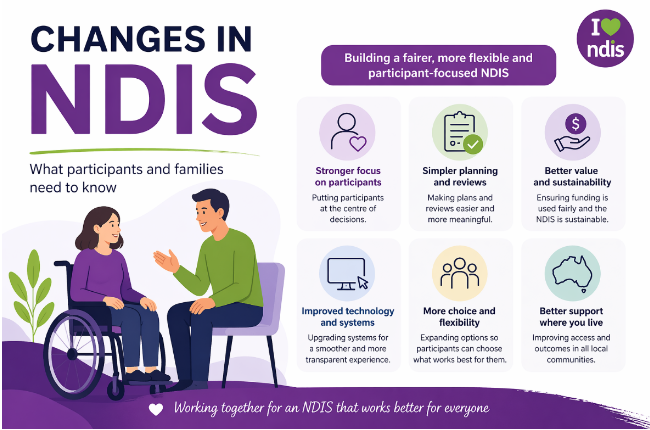
If you or someone you love relies on the National Disability Insurance Scheme, the second half of 2026 is shaping up to be one of the most significant periods in the scheme’s history. From 1 July 2026, the way NDIS plans are assessed, designed, and funded will begin to change in ways that will affect almost every participant eventually — and understanding what is coming is the first step toward making sure your supports remain exactly where they need to be. At Caring Arms Australia, we are a registered NDIS provider committed to keeping the people we support informed, empowered, and well-prepared. Here is everything you need to know about the upcoming changes to NDIS assessment criteria and what the new planning framework means for your day-to-day life. Why Is the NDIS Changing Its Assessment Approach? The existing NDIS planning process has been in place, broadly unchanged, since the scheme launched. Over time, it became clear that outcomes were inconsistent — two participants with almost identical needs could receive very different funding, depending on which planner reviewed their case, which reports they submitted, and how well they navigated the system. The NDIS Review, which consulted thousands of people with disability, families, carers, and providers, confirmed what many already knew: the process needed to be fairer, more transparent, and genuinely person-centred. The new framework is the government’s direct response to that feedback. Rather than relying on functional impairment as the primary lens — essentially, what you cannot do — the new approach shifts focus to what disability-related supports a participant actually needs in their daily life. This is a meaningful philosophical shift, not just an administrative one, and it has the potential to result in plans that better reflect real lived experience. The New Support Needs Assessment: What to Expect The centrepiece of the July 2026 changes is the introduction of a new Support Needs Assessment, which will replace much of the current evidence-gathering process for plan creation. Rather than relying on a collection of reports from treating professionals and lengthy written submissions, participants will instead have a structured conversation with a trained and accredited NDIS assessor. The assessor will meet with participants at a time and place that suits them. Importantly, participants are encouraged to bring family members, carers, or support people to this conversation — this is not a clinical test to pass, but a genuine discussion about daily life and what supports are needed to navigate it. The assessor will use a tool called I-CAN v6 (the Instrument for Classification and Assessment of Support Needs), developed by the University of Melbourne and the Centre for Disability Studies over more than two decades of research in the care sector. This tool is designed to be strengths-based and person-centred, focusing on what kind of support a person needs rather than simply cataloguing their limitations. The assessment report produced from this conversation will directly inform the participant’s NDIS budget. All plans will still be reviewed and approved by trained NDIS staff, and participants will retain their right to request a reassessment or appeal a decision through the Administrative Review Tribunal if they believe the outcome does not reflect their needs. How Plan Budgets Will Change From 1 July 2026 Currently, NDIS plans are organised into three funding categories: Core Supports, Capacity Building, and Capital Supports. Each category has its own rules about what the money can and cannot be spent on, and many participants find the current system rigid and confusing — particularly when their needs don’t fit neatly into one category. From July 2026, new framework plans will move to a simpler two-part structure. The first part is a flexible budget, which participants can use across any approved NDIS supports, giving greater choice and control over how funding is spent. The second part is stated funding, which is designated for specific, higher-intensity supports — such as Supported Independent Living — that require qualified providers and cannot be easily substituted. This restructure is designed to reduce the administrative burden on participants while ensuring the highest-need supports remain properly resourced. Plans will also run for longer periods under the new framework, meaning participants will face fewer routine plan reviews and will have more time and certainty to plan their lives around their supports. Reviews can still be requested at any time if a participant’s circumstances change significantly. Who Will Be Affected First — and When? The rollout will be phased rather than immediate. From 1 July 2026, the NDIS will begin new framework planning with adults aged 18 and over who have less complex support needs. All participants aged 16 and over are expected to be transitioned to new framework plans by October 2029. Participants under 16 will begin transitioning from July 2027, though the Government has acknowledged that no suitable assessment tool for younger children has been finalised yet. Children already enrolled in the NDIS will remain on the scheme during this transition. Changes to access criteria for children under 9 with autism or developmental delay who have lower support needs will not take effect until 1 January 2028 at the earliest, and those changes require separate legislative amendments. If you have a plan review scheduled before 1 July 2026, it will proceed under the current system. Reviews scheduled from July 2026 onward will use the new framework, but only for those in the initial rollout group. Your current plan remains valid until you are personally notified of a transition. There is nothing you need to do right now — the NDIA will contact you directly when your transition is approaching. Mandatory SIL Provider Registration: A Landmark Change for Supported Independent Living Alongside the new planning framework, 1 July 2026 also marks a critical date for Supported Independent Living. From this date, the NDIS Quality and Safeguards Commission is introducing mandatory registration for all SIL providers — including those who have previously operated without registration. This is a significant shift. Until now, the NDIS market has been divided between registered
NDIS Medium Term Accommodation (MTA) Providers: What is MTA and Why You May Use It Until a Permanent SIL or SDA is Found
NDIS Medium Term Accommodation (MTA) Providers: What is MTA and Why You May Use It Until a Permanent SIL or SDA is Found The National Disability Insurance Scheme (NDIS) provides essential support to Australians living with disabilities. One crucial component of the NDIS is Medium Term Accommodation (MTA), a solution designed to offer temporary housing for participants while they transition to more permanent housing options such as Supported Independent Living (SIL) or Specialist Disability Accommodation (SDA). Understanding what MTA is and why it might be the best option during this transitional period is key to making informed decisions about your care and support needs. What is Medium Term Accommodation (MTA)? Medium Term Accommodation (MTA) is a type of temporary housing funded by the NDIS for participants who require short-term accommodation for up to 90 days. MTA is not a permanent housing solution but acts as a bridge for participants waiting to transition into their long-term housing arrangements. MTA is typically provided to NDIS participants who: Are waiting for their permanent Specialist Disability Accommodation (SDA) to be ready Need temporary housing after being discharged from the hospital Require short-term support while waiting for Supported Independent Living (SIL) arrangements Are transitioning from one care environment to another The primary goal of MTA is to ensure participants have access to safe, secure, and appropriate housing while they wait for their permanent living arrangements to become available. Why You May Use MTA While Waiting for SIL or SDA There are several reasons why NDIS participants may need to access MTA before moving into permanent Supported Independent Living (SIL) or Specialist Disability Accommodation (SDA). These reasons include: Transitioning from Hospital or Rehabilitation Facilities After a hospital stay or rehabilitation program, participants may not be ready to move into permanent housing immediately. MTA provides a supportive environment where they can continue their recovery while waiting for their long-term housing solution. Delays in Specialist Disability Accommodation (SDA) Availability Specialist Disability Accommodation (SDA) is specifically designed to meet the needs of people with significant disabilities. However, due to limited availability and high demand, there can be delays in accessing these purpose-built homes. MTA helps bridge the gap, ensuring participants have a comfortable place to stay while they wait for their SDA home to become available. Waiting for Supported Independent Living (SIL) Arrangements Supported Independent Living (SIL) provides assistance with daily tasks to help participants live as independently as possible. Organising SIL arrangements can take time, especially when matching participants with suitable support providers. MTA offers temporary accommodation while these arrangements are finalised. Temporary Changes in Living Situation In some cases, participants may experience unexpected changes in their living situation, such as a breakdown in family support or the need to leave their current housing. MTA provides a temporary safety net, ensuring participants are not left without accommodation. What to Expect from MTA Providers NDIS Medium Term Accommodation providers play a crucial role in supporting participants during transitional periods. High-quality MTA providers offer: Fully accessible and comfortable accommodation Personalised support tailored to individual needs Assistance with daily living tasks Connection to community activities and social inclusion programs Coordination with other NDIS support services MTA providers are committed to creating a safe and supportive environment where participants feel respected and cared for during their stay. Caring Arms Australia – Providing MTA Services in Central Coast Caring Arms Australia is proud to offer NDIS Medium Term Accommodation (MTA) services in Central Coast. Our MTA facilities are designed to provide a safe, accessible, and comfortable environment for participants who need temporary housing while waiting for their permanent SIL or SDA placement. We are committed to delivering high-quality care and support tailored to each participant’s individual needs. For more information on our MTA services, visit our website: Caring Arms Australia. How to Access MTA under the NDIS For official information on NDIS Medium Term Accommodation (MTA), visit the NDIS website or check out the specific MTA guidelines at NDIS MTA Information. To access MTA funding, participants must have MTA outlined in their NDIS plan as a support need. The request must demonstrate that the temporary accommodation is necessary while waiting for permanent housing solutions such as SIL or SDA. Participants can work with their NDIS support coordinator or plan manager to identify suitable MTA providers and make arrangements for their stay. The NDIS typically funds MTA for up to 90 days, but extensions may be considered under special circumstances. Conclusion NDIS Medium Term Accommodation (MTA) plays a vital role in supporting participants during transitional periods, ensuring they have access to safe and secure housing while waiting for permanent Supported Independent Living (SIL) or Specialist Disability Accommodation (SDA). By understanding what MTA is, why it might be necessary, and how to access it, participants can make informed decisions about their care and housing needs. Choosing the right MTA provider is essential to ensuring a positive and supportive experience during this temporary period. Reliable MTA providers offer personalised care, comfortable accommodation, and seamless coordination with other NDIS support services to help participants transition smoothly into their long-term housing solutions. If you or your loved one requires Medium Term Accommodation, speak with your NDIS support coordinator to explore your options and find the right provider to support your journey towards greater independence and quality of life.