 anoop kc
 23-04-2026
 (0) Comments
 635 views
Why Is the NDIS Changing Its Assessment Approach?
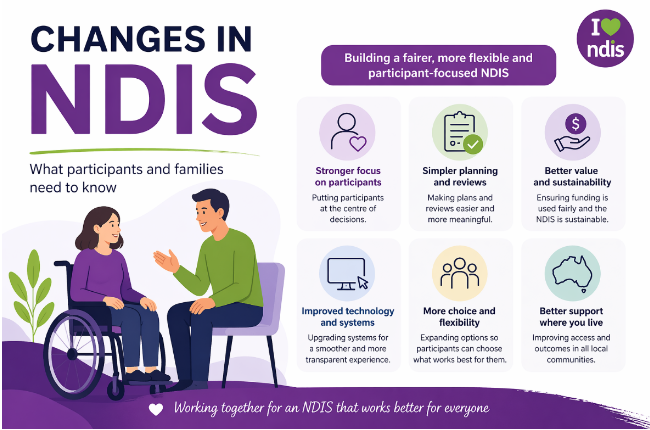
The existing NDIS planning process has been in place, broadly unchanged, since the scheme launched. Over time, it became clear that outcomes were inconsistent — two participants with almost identical needs could receive very different funding, depending on which planner reviewed their case, which reports they submitted, and how well they navigated the system. The NDIS Review, which consulted thousands of people with disability, families, carers, and providers, confirmed what many already knew: the process needed to be fairer, more transparent, and genuinely person-centred. The new framework is the government's direct response to that feedback. Rather than relying on functional impairment as the primary lens — essentially, what you cannot do — the new approach shifts focus to what disability-related supports a participant actually needs in their daily life. This is a meaningful philosophical shift, not just an administrative one, and it has the potential to result in plans that better reflect real lived experience.The New Support Needs Assessment: What to Expect
The centrepiece of the July 2026 changes is the introduction of a new Support Needs Assessment, which will replace much of the current evidence-gathering process for plan creation. Rather than relying on a collection of reports from treating professionals and lengthy written submissions, participants will instead have a structured conversation with a trained and accredited NDIS assessor. The assessor will meet with participants at a time and place that suits them. Importantly, participants are encouraged to bring family members, carers, or support people to this conversation — this is not a clinical test to pass, but a genuine discussion about daily life and what supports are needed to navigate it. The assessor will use a tool called I-CAN v6 (the Instrument for Classification and Assessment of Support Needs), developed by the University of Melbourne and the Centre for Disability Studies over more than two decades of research in the care sector. This tool is designed to be strengths-based and person-centred, focusing on what kind of support a person needs rather than simply cataloguing their limitations. The assessment report produced from this conversation will directly inform the participant's NDIS budget. All plans will still be reviewed and approved by trained NDIS staff, and participants will retain their right to request a reassessment or appeal a decision through the Administrative Review Tribunal if they believe the outcome does not reflect their needs.How Plan Budgets Will Change From 1 July 2026
Currently, NDIS plans are organised into three funding categories: Core Supports, Capacity Building, and Capital Supports. Each category has its own rules about what the money can and cannot be spent on, and many participants find the current system rigid and confusing — particularly when their needs don't fit neatly into one category. From July 2026, new framework plans will move to a simpler two-part structure. The first part is a flexible budget, which participants can use across any approved NDIS supports, giving greater choice and control over how funding is spent. The second part is stated funding, which is designated for specific, higher-intensity supports — such as Supported Independent Living — that require qualified providers and cannot be easily substituted. This restructure is designed to reduce the administrative burden on participants while ensuring the highest-need supports remain properly resourced. Plans will also run for longer periods under the new framework, meaning participants will face fewer routine plan reviews and will have more time and certainty to plan their lives around their supports. Reviews can still be requested at any time if a participant's circumstances change significantly.Who Will Be Affected First — and When?
The rollout will be phased rather than immediate. From 1 July 2026, the NDIS will begin new framework planning with adults aged 18 and over who have less complex support needs. All participants aged 16 and over are expected to be transitioned to new framework plans by October 2029. Participants under 16 will begin transitioning from July 2027, though the Government has acknowledged that no suitable assessment tool for younger children has been finalised yet. Children already enrolled in the NDIS will remain on the scheme during this transition. Changes to access criteria for children under 9 with autism or developmental delay who have lower support needs will not take effect until 1 January 2028 at the earliest, and those changes require separate legislative amendments. If you have a plan review scheduled before 1 July 2026, it will proceed under the current system. Reviews scheduled from July 2026 onward will use the new framework, but only for those in the initial rollout group. Your current plan remains valid until you are personally notified of a transition. There is nothing you need to do right now — the NDIA will contact you directly when your transition is approaching.Mandatory SIL Provider Registration: A Landmark Change for Supported Independent Living
Alongside the new planning framework, 1 July 2026 also marks a critical date for Supported Independent Living. From this date, the NDIS Quality and Safeguards Commission is introducing mandatory registration for all SIL providers — including those who have previously operated without registration. This is a significant shift. Until now, the NDIS market has been divided between registered providers — who undergo rigorous independent audits and must meet the NDIS Practice Standards — and unregistered providers who face no such requirements. For SIL, which involves shared living arrangements and often round-the-clock personal support in intimate home settings, the absence of mandatory oversight has long been a concern for participant safety advocates and the disability royal commission alike. Under the new mandatory registration arrangements, all SIL providers will be required to demonstrate compliance with the NDIS Practice Standards, ensure their workers have completed the NDIS Worker Screening Check, and submit to independent auditing of their service delivery. New Practice Standards specific to Supported Independent Living are also being developed, focusing on quality of life outcomes, participant choice and control within shared homes, and frontline practice leadership. These changes will ultimately protect the people living in SIL homes — and they reward providers who have always done things the right way. Caring Arms Australia is already a fully registered NDIS provider. Our SIL homes meet all requirements under the current and incoming regulatory frameworks, and our team is prepared for 1 July 2026 with no disruption to the people who call our homes their own.What About Housing? SIL Vacancies and Medium Term Accommodation at Caring Arms Australia
With the new planning framework placing renewed emphasis on appropriate, person-centred accommodation and the mandatory SIL registration changes coming into effect, now is a good time for participants and families who are thinking about housing to understand their options — and to know what is available locally. Caring Arms Australia currently has vacancies in our accessible Supported Independent Living homes. Our SIL homes are designed to support participants to live as independently as possible, with personalised rosters of care, respectful shared-home environments, and supports tailored to each resident's goals and daily needs. If you or someone you support has SIL funding in their NDIS plan or is likely to receive it under the new framework, we warmly invite you to get in touch to discuss whether one of our homes could be the right fit. We are also pleased to offer Medium Term Accommodation (MTA) in our homes for participants who need a safe, supportive place to stay while waiting for their long-term housing arrangement to be confirmed. MTA is an NDIS-funded bridging option — typically available for up to 90 days — designed for participants who are being discharged from hospital, whose home modifications are not yet complete, or whose permanent SIL or SDA arrangement is still being finalised. It is one of the most important but least understood NDIS housing supports, and having a registered, experienced provider ready to step in during what can be a stressful period makes an enormous difference. If MTA could be relevant for someone in your life, reach out and we will talk you through how it works and whether it is already funded in the current plan.How to Prepare for the Changes Ahead
The most important thing participants and families can do right now is stay informed and stay in contact with a trusted provider. Your current NDIS plan remains in place and nothing changes without notice from the NDIA directly. However, it is worth beginning to document the supports you rely on in your daily life — personal care, transport, community participation, household tasks — so that when your Support Needs Assessment does take place, you can walk into that conversation with a clear picture of your life and what helps you live it well. Think about your medium and longer-term goals too. Under the new framework, plans will be more goals-focused, and participants who have a clear sense of what they want to achieve — more independence at home, employment pathways, stronger community connections — will be better positioned to have those goals reflected in their funding. If you do not currently have a support coordinator and are feeling uncertain about the changes ahead, this is a good moment to consider adding one to your plan. Navigating a new planning framework is exactly the kind of task that a skilled support coordinator can make far less daunting.Caring Arms Australia: Here for Every Step
Change in the NDIS can feel unsettling, particularly when the scheme is a lifeline for daily living. But the intent behind the July 2026 reforms is genuinely positive — a fairer assessment process, more flexible budgets, stronger safeguards in SIL homes, and a system that is built to last for future generations of Australians with disability. Caring Arms Australia is a registered NDIS provider ready to support participants through every aspect of this transition — from understanding what the new framework means for your plan, to providing the registered SIL and MTA accommodation you need to live safely and well. Whatever lies ahead, you do not have to navigate it alone.Share